This guide explains what each scenario actually does, what the game asks you to destroy before the final confrontation, and how to set up a campaign that can absorb the hit. Specific numbers below come from Creative Assembly's own previews plus community testing after launch; treat them as current-as-of-writing, not permanent.
What changed in Update 9.0
Before 24 September 2026, "endgame" in Immortal Empires meant a random late-campaign event that spawned a pile of hostile armies. Update 9.0 split that into two tiers:
| Tier | What it is | Examples |
|---|---|---|
| Crisis Scenarios | Disruptive mid-game threats. They still spawn armies and they still hurt, but they are no longer framed as the campaign's ending. | A Grudge Too Far, The Wild Hunt, and the older crisis-style events. |
| End Game Scenarios | The designed finale: narrative build-up, bespoke mechanics, a cinematic, a visible world state, and a climactic conclusion. Three of them. | Chaos Invasion, Vermintide, Nagash Rises. |
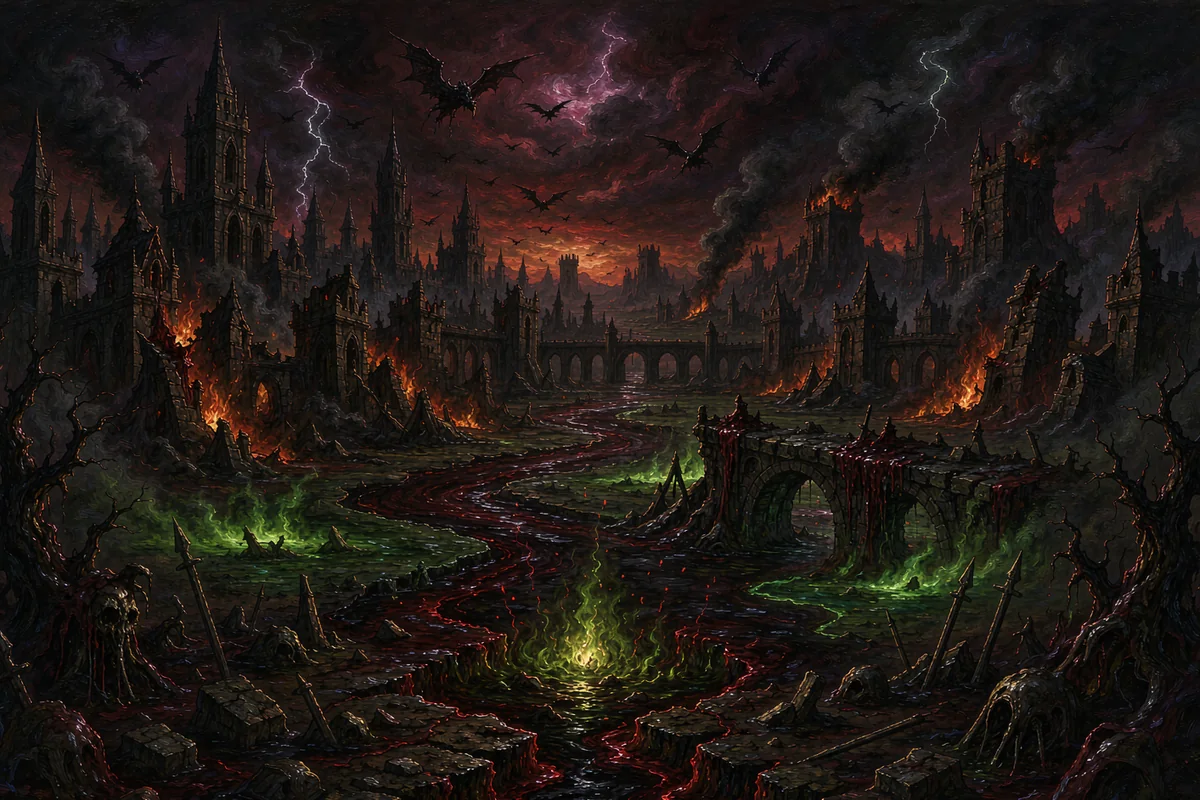
The visible part is Devastation: as a scenario spreads, campaign lighting, terrain and music change, and destroyed territory stays destroyed. That is not decoration — it reflects a rule that a region razed during a scenario cannot simply be recolonised until the threat is resolved.
Can you turn them off?
Yes. All three can be disabled or customised during campaign setup. Creative Assembly describes this explicitly as an option for players who want Immortal Empires as an uninterrupted sandbox, so using it is not a workaround.
- Set it before turn 1. Reaching turn 150 and discovering an unwanted apocalypse is on the way is entirely avoidable.
- If you want the finale but not the grind, customise rather than disable — the setup panel is where the scenario's severity lives.
- If you disable them, the older Crisis Scenarios are a separate setting. Turning off end-game scenarios does not automatically remove mid-game crises.
Mid-game preparation that actually pays off
A scenario is not a battle you win with one good army. It is a 20–40 turn attrition problem, so the preparation is economic and structural:
| System | What to do before it fires | Why |
|---|---|---|
| Treasury | Bank 15–25 turns of income instead of spending it on one more elite stack. | You will need to replace armies faster than you recruit them. |
| Settlements | Walls on every border settlement, not just the capital. | A walled minor settlement costs the attacker a turn, which is the currency the scenario drains. |
| Army count | Two or three full armies beat one perfect one. | Scenarios attack on multiple axes at once; a single death-stack cannot be everywhere. |
| Diplomacy | Convert neighbours into non-aggression partners or allies before the crisis, not during it. | Every neutral border you do not have to garrison is an army you can move. |
| Agents | Keep two or three heroes alive and levelled. | Several scenarios are won with information and sabotage, not battles. |
| Saves | Manual save from about 20 turns before the expected window. | Replaying a bad roll is cheaper than restarting a 150-turn campaign. |
Chaos Invasion
What happens: Archaon unites the Chaos-aligned factions into one invasion and becomes close to unkillable. Legions spawn from the edges of the world and start destroying the map rather than occupying it. Territory destroyed during the invasion stays destroyed until Archaon is dealt with, and losing a major settlement can flip the climate of its region.
How the fight is structured: Archaon carries a near-total ward save that is bought down by hurting the invasion itself — community testing after launch reported roughly 1% per 50 legions destroyed and 10% per Dark Fortress destroyed, with five fortresses to find. The fortresses and Archaon's own army are placed away from your territory, which is why the scenario is a map-wide hunt rather than a defence of your border.
What to do:
- Hunt the five fortresses first. Each one is worth ten times a legion stack in ward-save reduction, and they do not respawn.
- Grind legions on your own terms. Fight them where your reinforcements can reach you; every destroyed legion is permanent progress even if the battle is ugly.
- Do not auto-resolve. Invasion armies are top-tier compositions; the auto-resolve estimate flatters them against some builds and badly misjudges others.
- If you play Chaos or Beastmen (other than Archaon), the scenario offers a choice to join rather than resist. That is a legitimate route and it changes the campaign completely.
- Expect a set-piece finale. Beating Archaon once leads to a final confrontation rather than ending the scenario outright; keep a fresh army and a full treasury for it.
Vermintide
What happens: the Skaven stop hiding. Their settlements surface, they expand above and below ground at speed, and waves of ratmen pour out of major locations. The scenario tracks the swarm with a visible rat counter, and it arms Under-Cities to detonate settlements with Doomspheres.
What to do:
- Treat Under-Cities as the real objective. Every one you leave alone is a settlement you can lose without a battle. Find them with heroes and razing actions before they fire.
- Watch the rat counter, not the map. It is the honest progress bar — if it is not going down, your battles are not hitting the right targets.
- Protect a small number of high-value provinces rather than spreading walls evenly. Vermintide punishes wide, thin empires.
- Bring area damage and mobility. Swarm armies are numerous and fast; artillery, magic and cavalry that can reposition beat slow elite lines here.
- Use the anti-Under-City tools the patch added — CA shipped new buildings specifically for this fight. Skipping them makes the scenario significantly harder.
Nagash Rises
What happens: Nagash unites the undead factions under his Mortarchs and marches the Black Pyramid toward Nagashizzar, corrupting the ground as it goes. The scenario builds to a directed assault on the Pyramid instead of the old "random armies appear" pattern. Community reports note that it does not fire if you are playing Nagash yourself — in that campaign you are the one doing the unifying.
What to do:
- Interdict the advance early. The Pyramid's progress is the clock; fighting it at Nagashizzar with a full-strength undead coalition is the worst version of this scenario.
- Break the Mortarchs before the coalition solidifies. Each one you remove is a leader and an army you never have to fight at the finale.
- Bring armour-piercing and anti-large. Undead armies lean on monsters and single-entity constructs; armour-piercing damage and anti-large bonuses are worth more than raw model count.
- Plan for attrition. Undead rebuilding is cheap and yours is not — rotate damaged armies out rather than feeding them in.
After the storm
Beating a scenario is not the end of the campaign. The map is now full of devastated provinces, every surviving faction is racing to recolonise them, and your alliances usually reset to self-interest. Two things to plan for:
- Land rush: keep two armies mobile after the finale. The winner of the aftermath is whoever colonises the ruins, not whoever killed the boss.
- Rebuild economy before armies. Post-apocalypse income is depressed exactly when you want to re-arm. One growth-and-income province beats a fourth stack.
Common mistakes
- Preparing at the wrong time. Walls built the turn the invasion lands are walls that do not exist yet.
- Fighting the boss first. In Chaos Invasion especially, the fortresses are the boss.
- Auto-resolving elite invasion armies and losing a veteran stack to a bad estimate.
- Leaving the scenario setting on default without reading it, then being surprised by the timing.
- Spending the treasury on one showpiece army when the scenario needs three adequate ones.
- Forgetting mid-game crises are separate. Disabling end-game scenarios does not disarm the Crisis Scenarios.
Fact boundary: compiled on 28 October 2026 from Creative Assembly's Update 9.0 launch material, patch 9.0.3 notes and post-launch community testing. Ward-save values, fortress counts and scenario timings come from community reports and may be adjusted by later patches. Warhammer Guide has not tested these scenarios in-game; verify against the current patch notes before relying on a specific number.
Next steps: set the campaign up properly with the Immortal Empires guide, pick a start in the faction guide, learn the first 20 turns in the beginner’s guide, or read the Nagash campaign guide. Playing the other side of Chaos Invasion? See the Archaon guide.